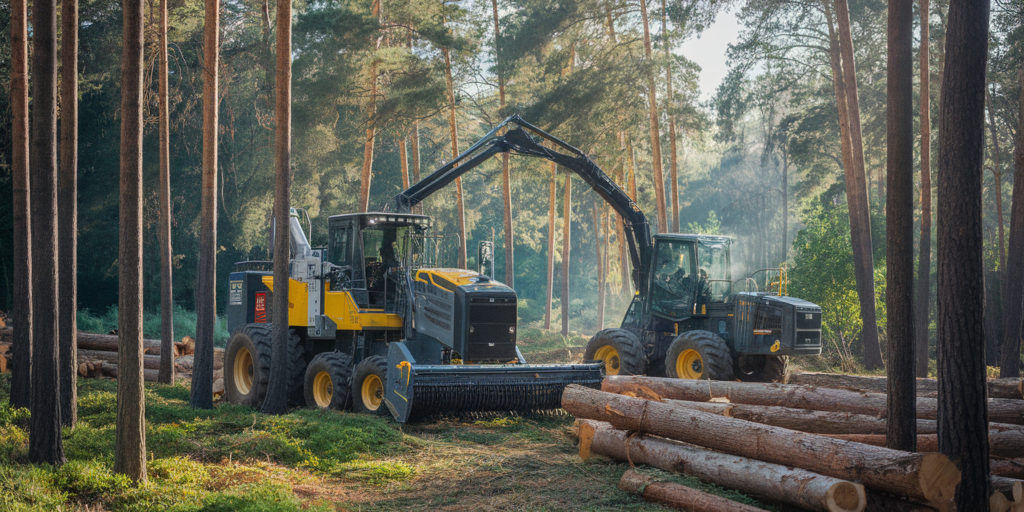
Forests have always played a central role in American life—supplying raw materials,
supporting rural economies, and protecting vital ecosystems. But the way we manage
and harvest these forests is changing fast. Across the United States, logging operations
are shifting toward cleaner, more efficient methods—and forestry equipment is at the
heart of that transformation.
Whether it’s a small contractor in the Pacific Northwest or a large-scale operator in the
Southeast, U.S. forestry professionals are increasingly turning to modern machinery to
meet rising demand while staying aligned with sustainability goals. The result? A
homegrown industry that’s not only keeping up with change—it’s leading it.
A Strong Outlook for the U.S. Market
In 2024, the global forestry equipment market was valued at just over $11.5 billion, and
the U.S. accounts for a significant portion of that. Looking ahead, steady growth is
expected as domestic demand for timber products continues to rise—driven by housing,
packaging, and renewable materials.
But this isn’t just about volume. In today’s market, forest operations are under more
pressure to work responsibly, manage land long-term, and reduce their environmental
footprint. That’s where the newest generation of American-made logging equipment
comes in—helping operators get more done while doing less harm to the environment
American Innovation on the Ground
The U.S. is home to some of the most trusted names in forestry equipment, and many
of them are leading the charge when it comes to cleaner, more efficient machinery.
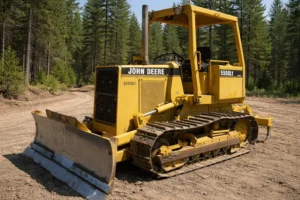
John Deere, for example, unveiled an all-electric excavator prototype in 2023, designed
to reduce fuel use and emissions on job sites. Meanwhile, Tigercat continues to refine
its lineup of forwarders, feller bunchers, and mulchers—built for the unique demands of
North American terrain.
These machines aren’t just more fuel-efficient; they’re easier to maintain, safer to
operate, and increasingly equipped with systems that help reduce soil compaction and
support long-term forest health. In many ways, U.S. manufacturers are responding to
the needs of landowners and contractors who want to work faster—but also smarter and
more responsibly
Policy Is Helping Push Innovation Forward
Government support is playing a big role in this industry shift. Programs from the U.S.
Forest Service and other federal agencies are making it easier for landowners and
businesses to upgrade outdated equipment and invest in sustainable practices.
At the same time, new emissions regulations from the EPA are pushing manufacturers
to develop cleaner-burning, more fuel-efficient engines—or switch to electric altogether.
State forestry agencies are also stepping up, especially in wildfire-prone areas, where
modern equipment is essential for fuel reduction and forest restoration.
In short, public policy is doing more than just funding innovation—it’s creating market
conditions where sustainability and profitability can go hand in hand.
What Equipment Is in Demand?
The U.S. logging industry is diverse, but a few categories of equipment continue to
stand out for their versatility, efficiency, and long-term value:
? Harvesters – Machines that can cut and process logs in a single pass, ideal for
selective and high-volume logging
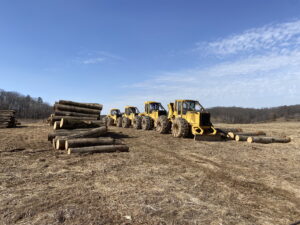
? Forwarders and Skidders – Key for moving timber quickly while minimizing
ground disturbance
? Feller Bunchers and Mulchers – Common in land clearing and wildfire
mitigation work
? Chippers and Grinders – Gaining popularity as demand for wood-based
biomass and mulch increases
Across the board, buyers are looking for equipment that’s not just powerful—but more
fuel-efficient, easier to service, and adaptable to different types of terrain and timber.
Why This Matters for U.S. Forests
With over 765 million acres of forested land, the United States has a lot to
manage—and a lot to protect. From carbon storage and water filtration to wildlife habitat
and recreation, American forests serve many purposes. Logging, when done
responsibly, supports all of them.
That’s why modern forestry equipment matters. New machines allow loggers to work
with greater precision, reduce collateral damage to surrounding trees and soil, and
contribute to long-term forest health. As more landowners adopt sustainable forest
management plans, having the right tools is essential.